a blog for class.

Monday, December 31, 2007

mush

Around deadtime (3am) last night, I had a horrible nightmare in which I was dying, the why and how of which I don't even want to go into. I rarely remember my dreams, but when I do, they are terribly lucid and powerful. The thing is, I was whimpering in my sleep as my horrible death went on and on until Mark woke me up. Even then, I was crying and shaking--tears come to my eyes even now remembering it. Not to be overly mushy, but it was only when he held me tight that I could stop crying and fall asleep again. He was my hero and my comfort, and I'm incredibly glad that he's in my life.

I take a lot of shit for being cynical, especially when it comes to romance, but it's not that I'm stoic or unemotional. Quite the opposite, in fact--I'm all pudding inside my hard candy shell. To prove it, I've put together some of my favorite heart-touching moments. This is by no means an exhaustive list, the order means nothing, and I'm sure there are many more romantic moments captured in film and literature, these are just the ones that came to mind.

1) Little Women--at the end, Professor Baehr comes back to give Jo the book she wrote and he published, and, thinking she had married, leaves in the rain, heartbroken. Jo runs after him and explains that it's her sister that had married and she is single. He says he has nothing to offer her, being poor, that his hands were empty. She clasps his hands in hers and says "they're not empty anymore."

2) Shrek 2--Shrek is afraid Fiona really wants the handsome prince charming, so he takes a love potion to become handsome and not an ogre, although he loves his ogre life. She has the opportunity to become and stay her beautiful human self, along with a human Shrek, but denies it, choosing instead to be herself and love him for the ogre he is.

3) Singles--"I was just nowhere near your neighborhood."

4) Virgin Suicides--High school heartthrob Trip Fontaine falls in love with Lux and sits next to her during a school assembly about hurricanes. Their hands inch closer together as the film drones on about warm and cold air masses colliding. You can feel your high-school heart beating the way it did that first time you held hands with someone when you were 14. Just when they are about to make actual contact, someone in the auditorium rips ass and the moment is shattered by embarrassment. Trip tells Lux he's going to take her out despite her strict parents, and before leaving leans over and whispers in her ear, "you're a stone fox."

5)
Some people hate a Shakespearean remake, especially starring the likes of Ethan Hawke. I think if you truly "get it," you appreciate this version--Hamlet's use of video-tape and pictures nicely reflect the applicability of Hamlet's betrayal, confusion, grief, love, hesitation, etc in the 20th century. If I could play any part of any play ever written, I'd be Ophelia, hands down.

6) Wuthering Heights has an amazing collection of heart-grabbing lines. I truly believe only a woman could capture the real power of love this way, not that men don't love too--it just would've been different if a man had written it.
"If he loved you with all the power of his soul for a whole lifetime, he couldn't love you as much as I do in a single day."

"I want to crawl to her feet, whimper to be forgiven, for loving her, for needing her more than my own life, for belonging to her more than my own soul."

"...he's more myself than I am. Whatever our souls are made of, his and mine are the same."

"Be with me always. Take any form, drive me mad, only do not leave me in this dark alone where I cannot find you."

7) Elephant Love Medley from Moulin Rouge. Something about Ewan MacGregor's voice. Plus this incorporates so many fantastic 80's songs, it boggles the mind. Go ahead--sing along.


Thursday, December 27, 2007

in absentia

I've never been emo or goth, but I have always had what I consider to be a healthy fascination with death. I'm hooked on Ghost Hunters and Paranormal State. It worries my mom. I won't touch a ouiji board, but the question of what happens to us, really, when we die, and even what dying itself is, is very interesting to me. Religion seems wholely based on living so that you don't go to hell. A great uncle of mine died at age 16 because of a freak and mysterious hunting accident, and said "it's so beautiful," looking around before he breathed his last. As I get older, it becomes clearer that birth and death are the truly uncontrollable things we go through--maybe that's why they are so strange. I read somewhere that the body is 3/4ths of an ounce lighter upon death--soulweight. The only thing that really distinguishes death from life, an element totally immeasurable and inescapable.

This was all weighing heavily on my mind when I took a walk through the cemetery (morbid? maybe), bored out of my skull after being home for nearly a week. The twilight of 4:30 and the monstrous hill where our Fulton dead rest, some stones hundreds of years old, became beautiful to me. I read the inscriptions, the only stories left--the oldest stones didn't even have names, just "mother," "father." The important things, birth date and departure date. My cousin had a baby Christmas day. I think about that girl, the sole survivor of a plane crash. I think about the hundreds and thousands of people killed daily, mere blips in the newspaper, dead because of the soullessness of others. I don't necessarily see death as something to be afraid of--I think reincarnation...yeah, maybe reincarnation makes sense.

Sorry to be so heavy. Still figuring this one out.

Pictures. The one is my uncle's grave, born and dead on the same day.


Friday, December 14, 2007

In School Suspension of disbelief

(the pictures are from Kate Eric's collection, Stories for Bad Children)

As luck would have it, I got me a gig. It seems my willingness to take on the most bizarre and inhumane of jobs (refrigerator factory worker, nuclear power plant janitor, waitress, gas station cashier, middle school teacher) and my networking skills have paid off. Instead of sleeping too late and goofing around for the next two weeks, I'll be an ISS monitor at a middle school down the street, where a friend is an AP. Cush, I thought--read a book and babysit the bad kids. I kinda like the bad kids, as frustrating as they can be. Thank God, cause I have $17 in my checking account.

Yesterday a boy said angrily, "you're a bad teacher" when I wouldn't let him turn in half-done homework. My pulse quickened and I replied quickly, "yeah, well, I hear you're not the greatest student." The other kids laughed, and I felt ashamed. I had shamed him, reinforced the label put on him for years. I don't even know these kids, I'm a sub, there's no established rapport to fall back on in order to excuse sarcasm. These are kids who are here for getting busted with pot, who had been in fights or threatened to kill their teachers. They swear, a lot, and talk about hip-hop, sex, and gangs. I'm no angel, but I worry about them. A lot of them have learning disabilities, and have learned to hide their embarrassment behind a billy badass attitude. I'd be an asshole to assume I knew them, knew what they were all about, what their parents are like, their home, their experiences, their history.

The ISS routine in place was to copy down definitions of 50 words, such as "integrity" and "honor," then do homework. (If you knew why I'm a long-term sub, i.e. where the old guy went, you'd find that very ironic, but mum's the word. Watch the news.) Screw that noise. Determined they would learn something before they continued down the path to the ALC and eventually TYC, I decided to promise them extra credit in Language Arts if they would write about what they wanted to be when they grew up, or about who they look up to. I thought if I could make them think about things for themselves, not for their peers or their pride, wisom would somehow ensue. So far this week no one has taken me up on it. I procured books from the library, thinking a good read would make their day of sitting silently go faster. This was difficult, as the library would only give me the throwaway books, concerned the kids might rip up good books. I offered them the option of drawing or reading the newspaper, in addition to their classwork. No sleeping allowed. As the AP described, they were not supposed to have a good time in ISS--they were not supposed to want to come back again. That means I have to be bad cop all the time.I'm not really a confrontational person by nature--I don't go looking to start shit but I don't take it either. Shit, that is. And when you are the one in charge of making 8-10 juvenile delinquents who have not been taught manners, don't know how to play nice with others, and wouldn't read a book for free food and video games, you are doomed to be unpopular. I can deal, I thought. I've got a good teacher voice. I can be intimidating, stretched out to my full 5'11''. I can verbally demolish these kids, whose best burn is "shut up," or "you're gay." After a day or two though, I realized my approach must change.

I forced a softness into my voice, made myself think of them as just emotionally-confused and immature kids who are trying to find themselves, and offered help upon help when what I really wanted to give them was a sharp kick to the side of the head. Graduate school and ivory tower-type jobs make education seem easily student-centered. In real life, some students don't want your help, don't want to write, don't want to read, don't want to be here. I don't blame them, hearing the way some teachers (including myself at times) talk to them, pulling power plays over things like gum, talking, whatever. They're kids, they will break rules, they will push buttons. The bottom line is, it does matter what you say and how you say it. I'll be damned if I turn out like Principal Vernon:


I realize I'm not a savior or a martyr. I can't turn a kid around in a few days of ISS. I'll be disappointed a lot. It's a tough job that someone's gotta do, someone that isn't going to make things worse. So I focus on small victories. Larissa will be with me until Christmas. I'm not sure exactly what she did, but it must have been pretty bad. She is 14 but could pass for 26, her clothes too revealing for 8th grade, her makeup caked on. She worked hard all day but around 2pm she got very grumpy with me and refused to do anything else. After engaging in a brief and pointless power struggle, I dared her to read a book. It's 3:14, and she's still reading it. Danielle is also a frequent flyer, with the worst mouth I've seen in a while. Despite the fact that she has dropped the F bomb 6 times and hit another kid in the head, she has worked on her assignment all day, talking to herself, writing, reading. Kenny has brought his science worksheets up to me four times, each time returning poutily to his desk after I point out that he has not answered all the questions. This last time, he kicked a chair and threw down his book as I explained how in real life, you can't half-ass things, that you see them through to the end like a man. Only nicer. He told me to shut up, defeated and frustrated. Several zingers bubbled up in my mouth, but I said nothing. A few minutes later when he looked at me, I mimicked his big lower lip, and after a few seconds' standoff, he cracked a smile. The two sixth grade girls, imprisoned for fighting (each other), admitted they didn't know what the fight was really about, just that some other kids had said one was badmouthing the other.

What doesn't bend, breaks. TJ is sleeping at the corner desk, but oh well. I just caught Larissa's eye as she glanced up from her book. She smiled back at me, and kept reading.

Saturday, December 1, 2007

This isn't English


Fecho reiterates much of what we've read from Rosenblatt, Freire, Dewey, Delpit, and other educational theorists and researchers in an eloquent way. He uses narratives and metaphors and spends a while describing what his book is not. I appreciate his point that there's too much emphasis on "getting through" the school days instead of wrestling out-of-syncness in the classroom, but it wasn't until the narrative of the guitar lessons that I felt connected to Fecho. His thoughts on inquiry-based teaching, theory and practice, strong collaboration and learning with peers definitely resonated with me, and I made notes and everything, but when he described the futility of his childhood dream of being a guitar hero I saw his direct route to learning land. I took piano lessons for years, dutifully practicing chords and drills and performing in several recitals with perfectly executed concertos and opuses, but not with the intensity and passion I heard coming from the piano when my mom played it. The closest I came to that was when I sat playing a few songs that captured me--Canon in D, Moonlight Sonata, Water Music, Ave Maria, and Prelude No. 4 in E minor Opus 28. Those had meaning.

Thursday, November 29, 2007

Gaughan


Reinventing English stretches the mind. We've all been saying for months the benefits that would follow if we were to somehow take the traditional structure of English education, with all its inequities and shortcomings, throw it up as high as possible, and put the pieces back together. But in a better way. Practical, no.

But Gaughan is teaching me to change what I can change, in the smallest of ways--a mindframe, a conversation, a question. Just the simple questions he asks in the first chapter, designed to examine the underlying assumptions that make up our kids, are brilliant. Too much of the time, we throw pre-packaged lessons their way, one size fits all, denying room for identity construction is in its most developmental phrase. Watch a John Hughes movie. Kids who don't like school are the ones stuck in Saturday detention. It doesn't mean they don't want to learn, just that they don't want to play the game. I don't blame them sometimes, depending on how anarchist of a mood I'm in.

Subbing gives me the chance to check out other teachers' rooms and meet different classes of kids, and I like talking to them about their lives and what they think about things. A lot of them sound like Billy--"the familiar suck continues to populate his language and his emergiving identity. No one wants to 'suck.' But if everything around you 'sucks' (at least, as you perceive those things), it is difficult to find the flowers of hope." (16) The 6th grade class I subbed for today was plagued with conflict--we had all the stereotypes present: a fat kid, a dumb kid, a funny kid, a non-verbal kid, a follower kid, a big girl, a popular girl, and a gay kid. That's not me labeling, this is how they viewed each other. And they all viewed each other as dumb, even themselves. From the moment the bell rang, I struggled to make them understand how mean their comments about each other were and prayed a fight didn't break out.

"But I don't like him!" the gay kid screamed about the fat kid.
"Darlin, don't you think you're going to have to work with people you don't necessarily like sometimes in real life?"
"It's ok," said fat kid, "I hate him too."

Sigh.

Life is harsh. It can suck, and often does. Why keep presenting learning as a sterilized desk-filled room and a scantron? Teach kids how to deal with life, to examine their culture and upbringing and how it affects them, to understand what things mean, who they are, what do they think. In the very least, don't ask them to check the horror stories some of them live everyday at the door so they can try really hard on your worksheets.

Ok. Down a notch. Back to Gaughan. Is anyone else putting this on their syllabus? I'm thinking about it.

"As teachers, I believe we silence too many conversations, in our fear of stepping out of the politically neutral perspective assigned to us by society."

I particularly like Gaughan's ideas on leaving our mark.

By the way, Mary Pierce Brosmer apparently opened a school for women writing for change.

Wednesday, November 21, 2007

What Makes Us Moral


saw this article from Time online, titled "What Makes Us Moral." More class-related blogs coming soon.

Tuesday, November 13, 2007

crazy bus folk, part two

As a sort of informal research project, I began listening intently to people on Cap Metro's southbound route 3 that takes me to school. Crazy interesting shit happens on the bus. Today's was the best in a while:

I boarded shortly after one pm after conferring times with some crazy dude with bandaids on his arms who was talking to a fairly normal looking guy about the location of a certain hospital. He didn't seem quite as normal when he pulled out a huge empty prescription bottle and said he was new in town, from Houston, going to go refill his friend's prescription of hydrocodone. Huh. Then Bandaid Man pulled out a similarly empty bottle, and they guffawed together for sharing a mission. Bandaid Man had just gotten out of the hospital for a staph infection, which he continued to describe in gruesome detail as we got on the bus. At this point I had trained myself to stop listening. Instead I focused on the bus driver.

Most female bus drivers are either so nice they'd bring you a cupcake if you told them tomorrow's your birthday or so mean they'll not only not let you take your water on the bus but berate you on your weight or hair at the same time. Today's driver was of the latter sort. She honked irratically and swerved like a Kennedy on a boat. At the Koening stop, an equally angry disabled lady got on the bus. "Are all these people disabled?" she barked at the driver, gesturing to Bandaid Man and a dorky girl suffering from a broken foot and acne.
"Ma'am, just get on the bus," the driver moaned.
"Don't boss me around!" she growled. Bandaid Man and seemingly normal guy continued their discussion in front of me, and seemingly normal guy gave him a few of the pills he had left. I continued reading Tom Robbins and tried not to laugh. Dorky pimply broken foot girl looked like she was going to cry, and angrily texted someone about the injustices she was suffering.

For the next five or so minutes, the driver struggled to get the wheelchaired lady buckled. Her habit of backing up sharply (as if in her walking life she constantly made sneak turns and scared people and had continued her aggressive moving into wheelchairhood) knocked the seatbelt out of the driver's hands twice. She had really worked up a sweat trying to reach around the lady to get that seatbelt, too. Any attempts at directing a collaborative effort were met with the warning "don't boss me around."

We finally got buckled and arranged and were about to lurch off when the man at the stop told us we were leaking antifreeze, which resulted in five more minutes of phone calls and head shaking, bitching and clock watching. I was glad I didn't have class til four. It was a beautiful day. Tom Robbins held me in the weirdness of the moment:

"Our individuality is all, all, that we have. There are those who barter it for security, those who repress it for what they believe is the betterment of the whole society, but blessed in the twinkle of the morning star is the one who nurtures it and rides it, in grace and love and wit, from peculiar station to peculiar station along life's bittersweet route."

thank you, nice white lady

Saturday, November 10, 2007

shape shifting

I found myself nodding my head and occasionally saying "yeah" outloud while reading chapter 9 at the coffeehouse (understandable as it was written by one of the Gee brothers), luckily there are always some weirdos at coffeehouses. Today it was the girl reading and talking to herself.

Hello? Life has changed. People can’t expect to stay in the same job moving ever gradually up in the ladder their whole lives any more. The age of computer programming (in terms of the model of mind being like a computer with certain formulas and projected answers to slotted outcomes) is over--now we use rapidly evolving technology to enhance the person side of us rather than the other way around. "Identities today take work, a person is expected to craft them out of available social and cultural resources. A person is expected to take on new identities through life, dropping some, changing others, and taking on new ones." (166) We know narratives, story-telling, collaboration, authentic questions, critical thinking, all these things should be making up our classroom practices. And I think technology addresses all these things, but isn't being connected to education enough.

Gee examines particularly the identity-forming potential of current media, despite reluctance and inability to give true equitable experiences with all available technology in the classroom. This would scrape too hard the scab of traditional schooling. Jazus, we can't be letting the kids carry their Ipods and cell phones around willy-nilly! We can't let them chat or look at music videos online, are you crazy? There are no TAKS questions on that kind of thing. Plus, hell, they might enjoy it, and we can't have that. Plus who has the time or the desire to sit around and try to figure out ways to tie personal technology and communication to learning? Certainly not a grad student, that's for sure. Har.

Taking that idea a step further, Brian and I discussed during break once all the components of symbolic interactionism and self-fashioning available via....wait for it.....Myspace. My boyfriend claims to have contracted myspace from a public restroom somewhere in Oklahoma. It has that effect on you. Of course the space that is yours has its limitations (its trendiness being the first), there are only a fixed number of ways to express who you really are, but still, your username, your song, your pictures, your videos, your groups, your quote, your layout, who your top friends are (and in what order, and dammit you better be careful about that), which comments you approve/deny, the comments you leave others, the 'about me' section, the interests section, the blog, etc...all these things attempt to present a digital version of you. You form yourself. You shape your identity, and continue shaping. And of course it's a playground for pedophiles, phonies, porno-hopefuls, and other losers, but you gotta take the good with the bad. More importantly, you have to teach people how to use the tools. But did anyone teach our kids to do myspace stuff? No. That's my point. If there's something a kid latches onto, almost innately knowing how and liking to do things, we owe it to him to connect it to his classroom. Not in a dissecting, scientific, TEKS aligned way, but to consider it knowledge and not playing around. Kids LIKE using technology--they're not scared of it like my parents, or unable to use it in a meaningful way that will enhance their lives.

I'm starting to think that educational equity is tied to the amount of opportunities and experience (with an emphasis on exploration) we can give students, but opportunities are tied not only to economic resources but also to trust. Do we trust that students can benefit from multiple literacies? Trust goes back to underlying beliefs and values. Chapter 12 talks about the differences in search skill (in analyzing the experiences students of different SES attempting to conduct online research) being due to difference in symbolic capital, number of opportunities, prior academic experiences and families' economic realities, and calls for deliberate instructional practices by teachers who understand reproduction theory.

Here's why we really need to be teaching digital literacy:

Thursday, November 8, 2007

Cars

I had to laugh. "There are well-off people who buy neobugs from VW, others who buy Mercedes, and yet others who get Hummers. These are different types of people, displaying, reinforcing, and creating their identities through the objects and services they buy." (165) Having a mechanic best friend and a car salesman boyfriend, I've had this conversation before. For the record, I have driven (in chronological order) an 87 Nova, a 98 Cavalier, a 90 Geo Metro Convertible (Gawd, that car), a 2000 Focus, and a 2007 Fusion. The Fusion is by far the nicest thing I've ever driven, and the fact that I got it after blowing out a tire, spinning around on I-35, and crashing into the wall makes it even more important. That was a life-affirming day.
Cause I'm proud:


Something interesting from the half-bakery. More reading to do.

Sunday, November 4, 2007

determined

It figures that Chapter 7 caught my attention the most, since that was one of the chapters we didn't have to read for class. Didn't realize that til after I read it. But I'm glad I did, because the concept of agency is one that's not only important to me as an educator but as a person just trying to live her life. But first, a word from the anti-NCLB movement, ala Alvermann: "Accountability-based reading reforms which emphasize high standards, clear expectations and strict consequences fail to address this important aspect of the literacies in adolescent's lives. These reforms portray adolescents as little more than passive figures for educators to control rather than as active independent and richly detailed human beings for educators to advise and assist."

The case of persuasive writing as described in the Nespor study reminded me of the book I'm reading for sociolinguistics where three studies were cross-analyzed to examine the role of identity in appropriating, resisting, or transforming classroom expectations. Sounds riveting, I know. It was the transformer students I felt drawn too, as they are exceedingly rare in a world where individual drive and choice is only superficially encouraged. These students knew how to play the game the teacher wanted played and got the grade but used the literacy practices in their classrooms to meet their own needs and agenda as well.

I've been looking for a way to incorporate a recent trip to Iowa for a wedding into a blog somewhere, and this is perfect. It had been a while since I'd been to a midwestern church wedding. I had forgotten all the rules you have to follow--how to act. Stand in this line, say this polite thing, meeting this person, sit at this table, wait in line, do this, do that. All draped over by a web of niceties and falsity that made me stabby. Add to this the agency-lacking ridiculousness of multiple airports--take off your shoes, wait in line, go stand in this line, arms out, nothing more than 3 ounces, be here at this time. Growl. It was alleviated to some degree knowing that my close band of a dozen or so friends had, like me, been anarchists from our freshman days of college together and were suffering as much as me--always the ones to cuss in inappropriate contexts, skip class and chapel, argue in class, be openly gay (not me but my roommate--this was a big no-no on our tiny conservative Christian campus), drink on the dry campus, smoke within 15 feet of the door, talk about inappropriate shit, consume approximately 65% of the booze available at the reception, and not get seriously involved in relationships or have the desire to be engaged by graduation. We are travelers, wonderers, non-conformists. It was nostalgic, the dirty looks we received from the good folk who follow rules and have happily/ignorantly constructed their lot in life by age 22. That's not to say we're Billy Badass or something, it's just that it was such a ideologically-strangling place to try to experience college. This is the center of predestination Reformation theology. As soon as I understood this concept as a church-going child, I didn't buy it. That's not to say I don't believe in God, either. Complex.

Here's the crew two seconds after the I Do's were did, rushing out to smoke on the corner.


I've always blamed my dissenting on my birth order--if you consider what we've discussed in terms of the social nature of learning and development, it makes sense that early childhood interactions with siblings and parents have a huge impact. I'm the baby. I want my way. That's how I'm wired after growing up the youngest and having to fight for a voice. I also have smackings of only child in me, as both siblings were out of the house by the time I was eight. And I know what you're thinking, but I was not spoiled. NOT. Click here if you like stupid quizzes.

Advocacy for human freedom includes a few concepts Alvermann explains: dismissing freedom means eliminating moral responsibility for human behavior (as people do what they're compelled to do), it eliminates hope of a better life, and it negates the concept that people can and do make decisions that could have been alternate decisions constantly. I had never thought of the Reformation, the Enlightenment, structuralism, and post-strucutalism as predeterministic vehicles of agency denial.

Viktor Frankl's home as a prisoner of the Third Reich:

"Everything can be taken from a man but one thing: the last of the human freedoms--to choose one's attitude in any given set of circumstances, to choose one's own way...there were always choices to make, every day, every hour, offered the opportunity to make a decision, a decision which determined whether you would or would not submit to those powers which threatened to rob you of your very self, you inner freedom." Viktor Frankl

So what does this mean? Alvermann: "these quotations illustate - people are free to interpret the events of their lives. This freedom of interpretation keeps peoples' past and current situations from determining their future. It is the essence of human agency." (135)

You know when you meet people with no agency. You will know them by the trail of anger and unhappiness, failed relationships, addictions, sketchy job history, and in some cases, criminal records. The inability to make decisions that benefit them. It's sad. We've all been there.

In any case, when it comes to what the world wants you to do, what you need to do to get by, and what you need to do to be happy, be a transformer. And not a Decepticon.

Wednesday, October 31, 2007

say what one more time, I dare you

Holy shit I love this book. At least the first chapter anyway, we'll see how it goes. Even though I had my doubts when the author said one of the kids in the study was her son, the way she interviewed El and David about the influence of text and media in their lives and development into people in high school then 8 years later was brilliant. What an interesting time--we graduate having jumped through all the necessary hoops and then start living our lives and come to find out what was really important to have learned in the safety of those early years. Ironic that my Halloween costume is Uma Thurman's character from Pulp Fiction...

Incidentally, I met Quentin Tarrantino once--he's a big dude, and kinda scary.

I often bemoaned the fact that great thinking and learning could be done with popular media, and should be, as it's relevant and interesting to kids' lives. Why force them to read shit deemed "classic" if they don't care? Not to say that the classroom should be a movie theater or that we should leave classic texts out, but why be so scared to incorporate them? Especially when, as the interviews with El and David show, they are so formative to identity and social relationships?

I connected with these two kids/people on a number of points -- I consider myself to be a moral dissenter: I use plastic but I protest the hell out of Walmart. I take moral stances. I'm a critical thinker. I swear a lot. I read books and watch movies and talk and act them in my normal life, with friends. Like David, I enjoy living in a city rather than the tiny town I grew up in. I love to jam culture, and used to use adbusters in my classroom as much as I could get away with. David says, "I'm not part of Generation X, but I think these guys are sick of always having a plot line, or sick of things always having an inner meaning. I think every show has a point. But I don't think that it has to be a big one. I think life is like that. It doesn't always have a big point. Just lots of little ones." David and El seem to have a good grasp of what could make schools better and more real--teach differently, first of all. And use the media. Teach media literacy. El knows that for us, nowadays, "everything is presented in sound bytes, and black and white arguments, images, numbers--the death toll for the tsunami is rising, we see how horrific it is but we have no real sense or consequence of that, we're still here, whining..."

Am I a GenX kid? The lines are hazy. I was born in 79 but have two older siblings a decade ahead of me, and older parents (early 60's). I had not really considered the impact of what generation you are in terms of how you approach literacy and identity--boomers, GenX, hippies but obviously this makes a big difference--what the world is like when you begin and continue reading and viewing and discussing with others from the same (and different) eras. Wiki says "Generation X is generally marked by its lack of optimism for the future, nihilism, cynicism, skepticism, alienation and mistrust in traditional values and institutions." Huh. It adds that some relevant GenX movies include Singles, Reality Bites, Clerks, the show Friends, Ferris Bueller's Day Off, and Pump Up the Volume, all of which are rad except Friends.


David makes a good point about personality development--"you just change according to your surroundings, your age, your experiences, but that core personality that you start out with is still there..."

Another thought on travel, as both kids did some of that and reflected on it accordingly (and I'm trying to save up to go to Thailand, my first trip out of the country, and already live a good thousand miles from my hometown): "I can't live my life not knowing wht I would do on my own, completely, by myself. That's why I think travel is important...it allows us to invent ourselves outside of any context."

Thursday, October 25, 2007

in the heart of the city

So I'm only a little ways into Tatum's Teaching Reading to Black Adolescent Males and already I am struck by his straightforward and common sense style, firmly rooted in his own personal experiences. I'm only on Chapter 3 and already he's brought so much up...but in my head I'm hearing a song as I read, "Heart of the City," which I thought was only a Jay Z song, but come to find out that Whitesnake did it first. Interesting to hear the two versions:


I also just recently heard Chris Rock's piece on welfare (thanks to Sirius Radio), and one line stood out to me (and this is right before I sat down to read): you get more respect as a black man coming out of jail than you do coming out of school.

Back to reading.

Monday, October 22, 2007

unpredictable

So now I'm attempting to write a hopelessly abstract and complicated philosophical post about prediction, reading strategies, and...uh, life. I'll ease you into it:


Myspace Layouts - Get This Widget

It began with an hour's worth of talking about the why/how of teaching reading strategies such as prediction and inference to reluctant readers, and how these skills play a role in reading, and, neccessarily, interpreting, which has a lot to say in terms of how we see life and other people (and since visualization is also an important skill in creating meaning, I want you to picture an aerial shot of our classroom in Sanchez and a quick pan out and up, pulling back from our city, our lives, our countries, all the way out).
The point of real-life application is (or should) always an issue for educators. Currently most of my papers and readings are directing me to think about authentic questions in curriculum and real learning. Unfortunately real-life assessment is more about evaluate-able items, such as: cause and effect, main idea, inference, etc, although these things too are open to bias and interpretation. I became interested in the usage of "predict" and "inference," and a quick Google search showed prediction's ties to the emotive, the mystic, the unexplained (but accessible if you just click on the right pop-up) while inference brings up several easy-to-use websites to practice making inferences from info in the text (and only in the text, dammit). A void seems to exist, at least in connotation, between the terms' relation to the unexplainable.

Listen to Miss Cleo:

I don't have to tell you what a big business prediction and prophecy is for us uncertain folk. Besides the consumer appeal of quick card-readings, we constantly think of (or assume, and you know happens when you do that) what's coming next anyway, it's what makes us human. In fact, I imagine animals do it too. When I woke up today I predicted the water in my shower would be hot after a few seconds, that when I turned the key my car would start. But that's experience, routine. I take what I see happening and apply it. Kids can do that. Kids know when they cry they'll get fed or changed or whatever. Kids know what it means when someone in a horror movie says "I'll be right back." They know if they act the fool they might be able to hide their embarrassment of having a reading problem. That's common sense with a side of symbolic understanding. But we have to teach them, for the benefit of being allowed into academic discourse, to do that from text alone.

One last thing. As a person who tries to see the irreverent/flip side of much of life, I realize how much of our humor is produced simply from predictions being wrong. A joke, a comedy, something that proceeds differently than we expect causes us to laugh. Misdirection. This technique is also popular among our politicians and presidents, with much less funny consequences.

As the TV drones, I am aware of how predictable things are in pseudo-life, in sitcoms and cop shows. Not so in real life. I wonder how many people predicted they would be where they are now.

Thursday, October 18, 2007

my horoscorpio

"Dear Rob: Three and a half weeks ago, I had a dream that I was an archaeologist excavating hell. I took comfort in the fact that I was just a visitor, not a permanent resident, but my stay there was . . . well, hellish. Whenever I found an interesting artifact buried in the hot dirt, it would spontaneously ignite. I narrowly avoided getting burned again and again. Anyway, my actual waking life has pretty much felt like that ever since the dream. Yesterday, though, I felt the torment lifting. And then last night I dreamed of floating in a fireproof boat along an underground molten river of lava that eventually took me out to a green meadow under blue skies. Whew! -Sizzled Scorpio." Dear Sizzled: Your journey parallels that of many of your fellow Scorpios. Welcome back from hell!

Wednesday, October 17, 2007

Cheers to Beers (the author and the liquid)


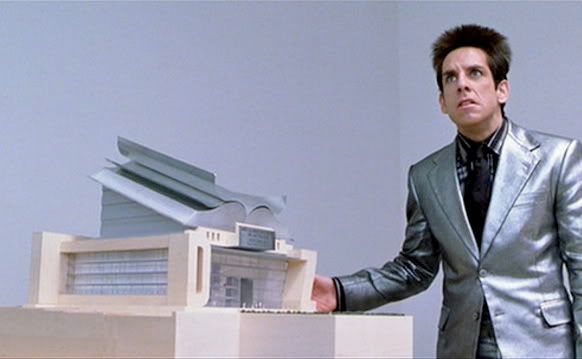
Derek Zoolander School for Kids Who Can't Read So Good and Want to Learn How to Do Other Stuff Good, Too.


So Beers' book is a new kinda thing--it's not really theory, it's definitely not a novel, it's more of a handbook jampacked with strategies to use in the classroom for struggling readers. So many strategies, in fact, that my notes for this book consist of what strategy appears on what page. I appreciate the notes between chapters written to George, the student she failed (not just by retaining him either), because I feel my own guilt of students I let slip by because I really didn't know where to begin to help. Beers is damn organized too--each chapter features the pragmatic "step inside the classroom" segment, a Q and A section, copyable charts and doodads, debriefing of the strategy and instructions on how to make it work. All very helpful, and needed, the kind of thing that would go over well at professional development. She is clear to say in the beginning that no one answer is the right one, but that there are answers, and her personable voice along with the case studies presented makes this a pretty straightforward read, I'm on pg. 160 after only a few hours of reading. The fact that she thanks Ed Farrell in her dedication and quotes from Rosenblatt and Cazden offsets the somewhat self-gratifying pictures of Beers in action (I like pictures in books, but it seemed a little unnecessary).

I've done the scripted approach, had to as a reading teacher for the Institute of Reading Development, and I agree with Beers' point about delineating between "direct" instruction vs. "scripted." But I will say the scripted approach does produce results as well, mostly for those students who already have a good grasp of school culture and don't have negative attitudes about reading. Beers says the negative attitudes, a lack of cognitive confidence, and an inability to choose books they like are three foundations for reading problems. She emphasizes connections, listening, and being explicit among many other strategies....I don't find myself having many questions or emotional reactions to this book, it is what it is. Very practical, and very organized. So I guess one way to write about it is to ask, which of these ideas have ya'll tried in the classroom, and how'd it work out for you?

president evil

They say you shouldn't talk about sex or politics. I've already talked about sex.
Photo Sharing and Video Hosting at Photobucket

I have the luxury of no classes on Wednesday so I'm watching this horrible abortion of a press conference. The issues of culture, education and democracy are woven into most of the books and discussions I've been into lately, all tied in by language, and I'm gritting my teeth to listen to Bush right now. I was raised in the buckle of the Midwest Bible Belt and my mom's basement is decked out in Americana decor, and I'm disgusted. He's spent a third of the speech so far dissing Congress for not doing anything and excusing himself from all governmental practices or knowledge, another third not answering legitimate questions by making excuses and heading off into tangents held together with cliches and reactionary talk, and the last third not answering questions by simply refusing to answer them and accusing the press of trying to trick him. This is our president. If I had a tank, I'd be headed southeast, and I don't even like politics. Even his speech patterns inspire doubt, full of pauses and qualifiers, completely void of confidence or direction, all delivered with a maniacal smirk. He's pulled a political Britney Spears, and I bet his speech writer feels like her management company.
Photo Sharing and Video Hosting at Photobucket

I don't want to get into a whole big thing about current events, but it struck me that our government no business screwing around (I use that term loosely as some exchanges and relations are beneficial but others damaging) with other countries, simply because we don't really know how to understand them. Or maybe we do on some levels, but not the general public, and even still there's an entire culture's difference when it comes to ideas like "democracy" and "peace" and "normal." Crissy's been back from Japan for the last couple weeks and told me about all the cultural differences she's experienced in the various countries she's visited. We have no idea. Yet we're suppose to support these governmental actions carried out by people and causes who don't know how either and have their own ideological interests and agendas, filtered through a red-taped ridiculous process hampered by power struggles and personal scandal. And read this! This is bullshit. I know in real life it's not this simple, but George? Help the people and countries who need help, and be really careful about how you define "help."

In case you missed it, this is a similar press conference, where Bush suggests the danger zombies present to the US.


Top 10 Bushisms, more can be found here:
10) "Families is where our nation finds hope, where wings take dream." —LaCrosse, Wis., Oct. 18, 2000 (Listen to audio clip)

9) "I know how hard it is for you to put food on your family." —Greater Nashua, N.H., Jan. 27, 2000(Listen to audio clip)

8) "I hear there's rumors on the Internets that we're going to have a draft." —second presidential debate, St. Louis, Mo., Oct. 8, 2004 (Listen to audio clip)

7) "I know the human being and fish can coexist peacefully." —Saginaw, Mich., Sept. 29, 2000 (Listen to audio clip)

6) "You work three jobs? … Uniquely American, isn't it? I mean, that is fantastic that you're doing that." —to a divorced mother of three, Omaha, Nebraska, Feb. 4, 2005 (Listen to audio clip)

5) "Too many good docs are getting out of the business. Too many OB-GYNs aren't able to practice their love with women all across this country." —Poplar Bluff, Mo., Sept. 6, 2004 (Watch video clip; listen to audio clip)

4) "They misunderestimated me." —Bentonville, Ark., Nov. 6, 2000

3) "Rarely is the questioned asked: Is our children learning?" —Florence, S.C., Jan. 11, 2000

2) "Our enemies are innovative and resourceful, and so are we. They never stop thinking about new ways to harm our country and our people, and neither do we." —Washington, D.C., Aug. 5, 2004 (Watch video clip; listen to audio clip)

1) "There's an old saying in Tennessee — I know it's in Texas, probably in Tennessee — that says, fool me once, shame on — shame on you. Fool me — you can't get fooled again." —Nashville, Tenn., Sept. 17, 2002 (Watch video clip; listen to audio clip)

Wednesday, October 10, 2007

Push

I read Push in a few hours, and I don't say that to brag. After four books on lit theory, a novel was a breeze. But it was a cold, shitty breeze that make me feel a lot of yuckiness inside. I know that's what everyone will touch on in their posts, how hard it was to read the story of a girl sexually abused by both parents, mother of two kids by her own father before high school, suffering from extreme confusion, depression, poverty, illiteracy, and HIV. Heavy. I know why we read it, what we were supposed to do--gauge our emotional reactions a la Rosenblatt. At the same time we could look at Precious' experiences with reading and writing. I did a little searching on Sapphire and the book, here's an interview. I thought this statement about purpose was interesting: "There's a blues song 'What's Been Done In the Dark Has to Come to the Light' and I think that's something that stays on my mind. I always want to bring out what's been hidden or marginalized. In Precious she is more misunderstood than invisible, we hear about her everyday. Every time Newt Gingrich opens his mouth it's about a welfare mother. I wanted to shed additional light. I wanted to show something behind the statistic. So yeah, I'm on a mission."

These things sparked me -- Precious' descriptions of feelings and people and places are child-like, very low-level from a professional standpoint, and yet they are more wisely phrased and profound than established professional writers, at least in provoking an emotional reaction:

"Can't he see I am a girl for flowers and thin straw legs and a place in the picture."

"There eyez is like far away spaceships."

"I'm alive inside. A bird is my heart."

"...I am sick of the walking dicks of Harlem."

"So my mother--one eye, no man, two children and the Bible."

"
Sometime I wish I was not alive. But I don't know how to die. Ain' no plug to pull out. 'N no matter how bad I feel my heart don't stop beating and my eyes open in the morning."

Other strong themes I picked up on were the power of narratives (especially in the support group scene where Precious learns there are others like her, who have suffered like her), the bullshittiness of bureaucracy (the tests and reports and welfare trouble), and Precious' metamorphosis, best described by her list of what's important to her on pg. 109. Precious walks through Harlem and describes the filth and desperation of the ghetto, her hatred for crackheads and the ironic injustice of being considered one of their lot. Most of all I felt the worst seeing her struggle through the horrible confusion of the sexual abuse at such a young age, by her father. That was the worst. Luckily the love and acceptance she finds in friends and herself leads me to believe that she turned out ok after the last page was turned.

"Ms. Rain say one of the criticizsm of The Color Purple is it have fairy tale ending. I would say, well shit like that can be true. Life can work out for the best sometimes. Ms. Rain love Color Purple too but say realism has its virtues too. Izm, smizm! Sometimes I wanna tell Ms Rain shut up with all the IZM stuff. But she my teacher so I don't tell her shut up. I don't know what "realism" mean but I do know what REALITY is and it's a mutherfucker, lemme tell you."

Monday, October 8, 2007

de gustibus non disputandum


Photobucket - Video and Image Hosting


“A specific reader and a specific text at a specific time and place: change any of these, and there occurs a different circuit, a different event—a different poem.” (14)

The central importance of this factor of the reader’s focus on attention is assumed in Coleridge’s famous statement about poetry: “the reader should be carried forward, not merely or chiefly by the mechanical impulse of curiosity, or by a restless desire to arrive at the final solution; but by the pleasure activity of mind excited by the attractions of the journey itself.” Buy the ticket, take the ride, in other words. (Thanks Doc) 28)

“The reader responds to the verbal stimuli derived from the text, but at the same time he must draw selectively on the resources of his own fund of experience and sensibility to provide and organize the substance of his response. Out of this the new experience, the literary work, is formed (43)

“The writings of a Hitler might arouse powerful emotions of hate in a reader, but this would still be an efferent reading, which might, for example, lead him to rush out and engage in mob action.” (45)

“We are not vicarious or substitute Juliets…we are living in the world of the work which we have created under guidance of the text and are entering into new potentialities of our own natures.” (68)

“In our schools, the emphasis in the teaching of reading is almost entirely on the efferent stance. Comprehension in reading tests is assumed mainly to be of this type. It is not possible here to detail the methods of the teaching of literature in school and college that tend often to develop an efferent attitude, even toward the literary work of art." (79)

“We must recognize that the reader brings to or adds to the nonverbal or socio-physical setting his whole past experience of life and literature.” (81)

“Impressionist critics were charge with forgetting the poem itself as they pursued the adventures of their souls among masterpieces” (102)…"given the fact that a poem is re-created each time it is read, can we validly speak of anything as being the poem itself?" (104)

“Probably no work of art can suffice as interpretation of another work.” (136)

“The solution, as I see it, lies in rejecting the preoccupation with some illusory unspecifiable absolute or correct reading or ideal reader. Let us look at the reality of the literary enterprise, or “literature” as a certain kind of activity of human beings in our culture…we need to stress the basic affinity of all readers of literary works of art. The general reader needs to honor his own relationship with the text.” (140)

“The solution, as I saw it, is the education of a reading public that would appreciate aesthetic values and accord the serious artist freedom and support." (142)

In light of some illusory unspecifiable absolute or ideal reading, all readings are failures. The emphasis should be rather on a creative transaction, a coming-together of a human being (with all that implies of past experience and present preoccupations) and a text (with all that implies of potentialities for participation)."(144)

“Literary judgments—on, say, “Byzantium” or “Middlemarch”—are actually judgments on the potentialities of those texts to enable readers to evoke an aesthetic transaction.” (153)

“Another consideration: the reader undertakes to see the work as a whole, yet in actual literary transactions it may sometimes be some minor part that had intensely personal reverberations. A poem may live in the memory through only one phrase that suddenly embodies for us the ‘joy’ and the ‘juice of life.’” (160)

Hopefully by ending on this note, the method of this particular post becomes clear. I’m also ending with this last quote in hopes that it will generate a bulletin board of sorts—what pieces of text, phrases of books, lines in movies, have sparked you? For me, one of the strongest was from "The Virgin Suicides" by Jeffrey Eugenides: We knew the girls were really women in disguise, that they understood love, and even death, and that our job was merely to create the noise that seemed to fascinate them."

Wednesday, October 3, 2007

growling flowers

"these so-called avant-garde artists seem to be rediscovering the basic alphabet of aesthetics; though their works are often very minor indeed, they may be performing a function by educating a public largely wedded to the purely efferent attitudes to begin the slow development of aesthetic attention to an awareness of their own responses." (Rosenblatt, 82)


tell me do you feel it?

As I started to read Rosenblatt's The RTP, I was initially worried, as I wasn't getting into it as much as her other work. But I think that's between the first two chapters are essentially fluently rewritten ways to describe the interdependent triad of reader, text, and poem of meaning making. Chapter 3 was where I started to become more involved, particularly with her analysis of efferent and aesthetic reading. Beginning with one of my new favorite ideas of "burning through" a reading, living through it, she delineates the kinds of approach we take to reading between reading to remember or apply (more typically found in scientific reading) and the pure art, affective stance, like Keats writes about in "On Sitting Down to Read King Lear Once Again." In addition to the combined stance needed to read and make sense by use of referents or imagination, "different aesthetic transactions with the same text may also produce different or levels of experience, depending on the nature, state of mind, or past experience of the reader." So, not only can someone not read a poem for you, you can't read it the same way twice. This makes me wonder if the question of what classics are universal even matters.

Efferent-dominant reading is what we're teaching kids to do. Read for details, read to answer the questions right. There's no way to test on affect, on aesthetic, as it's particular to each person. I felt a pang of guilt, remembering my first year of teaching at HSA, first year with my own room, with no real supervison as it was a charter school, copying out worksheets from suggested workbooks that invited the kids to classify poem tones by their titles. Extracting democratic messages from decontextualized political speeches. No wonder my kids got great TAKS scores. But now I'm not so proud of it. Luckily they had enough experience and enough academic confidence to read for pleasure as well. But what if we could get kids to feel like this:

only slightly more intelligently.

Thought on the transformative power of the narrative--I've read the Bible, been to Sunday school and church all through my youth, and have taken classes in religion, yet what leads me to know/believe that there is a heaven is a story about a young man who was killed in a hunting accident, and as he bled to death, he looked around him and said, "it's so beautiful," before dying. This story might have left me somewhat nonplussed had I seen in a movie or novel, except that this was a truth story, and happened to my great uncle. Experience and culture does make a difference.

Friday, September 28, 2007

Adolesense Pt 2

Rosenblatt's description of adolescent upheaval includes some insight to confusing aspect of sex. She claims there's an inadequate amount of preparation in the discourse of the bedroom, and avoid or misrepresent sexual matters, leaving young people to draw their own conclusions while being bombarded by sexual messages in the media and from other unreliable sources.

This book was discussed on Mike and Juliet's Morning Show today. Ms. Levkoff managed to say "vulva," "masturbation," "erection," and "wet dream" in the first five minutes. I tried to watch, as it directly relates to the topic of conversations--what you can and can't talk about and why. But when Mike offered up that he remembered having a wet dream, I had to change channels. I can talk about sex probably more than the next person, but I was trying to eat.


Ellen DeGeneres also discussed the difficulty of explaining sex to kids as she had a guest to her show read a passage of her rereleased book, "My Point (and I Do Have One)." The passage was a funny dialogue between a young child and a parent, who attempts to explain the youngster's query by metaphors of an egg, a mama bear and papa bear, growing a baby in their stomach, Daddy's special sauce, and ended on a mutual liking for hamburgers. The guest reader, by the way, was a woman who claimed in her survey (the whole audience was surveyed about their sexual lives in order to examine America's lacking sex life and need for frank, open conversations) that she had sex everyday. She looked healthy, relaxed, happy. Her husband was a piledriver. No, that's his job. Seriously.

Thursday, September 27, 2007

Adolesense

I've found that if I stop to post on every interesting chunk of Rosenblatt I will have no time for any other classes. Nevertheless,

In the 3rd and 4th chapters, she begins to address concerns as an English educator--schools are too often failing to provide contexts for students to experience a vital personal reaction to art in the form of text. Schools make a frame with no picture--students regurgitate what they think the teacher thinks of a story, and fail to give a real response. Things don't change because teachers uphold certain expectations (as do parents and everyone raised in traditional mainstream public schools) of what school should do and look like: writing traditional essays and answering multiple choice questions about who the main character was. Teachers have to value true literature experiences themselves, liberate pupils from self-defeating practices, give them freedom to wrestle with ideas and emotions, and not place so much value on a particular form of response.

"The study of literature should give the student the form of emotional release that all art offers and, at the same time, without strain or pressure, should help him gain ever more complex satisfactions from literature." (71)

"A poem or a novel should provide fresh insight. Readers, therefore, must be helped to develop flexibility of mind, a freedom from rigid emotional habits, if they are to enter the aesthetic experiences the artist has made possible." (98)

Rosenblatt does a decent job of capturing the upheaval of the adolescent mind--changing body images and obsessive self-consciousness, a desire to reflect what's "normal (and here I suggest more attention to media awareness in our curriculum is needed)," struggling to find independence and emancipation from familial structures. They need links to their experiences to be present in the books they read. They need to be emotionally and intellectually ready to reevaluate assumptions and cultural suggestions, and to adjust accordingly. This is how readers live in the world.

Easy to see why fundies are so scared.

I return to my question about whether or not some books may be universally accessible. I feel like Rosenblatt's saying yes. But not without a lot of trickiness.

Wednesday, September 26, 2007

the no-title post


"Sensuous details will acquire significance as they lead him to glimpse the emotional undercurrents that flow so swiftly beneath the surface of everyday life."

Rosenblatt's Ch. 2, "The Literary Experience," posits that the reader makes the text into something more than words on a page, that the individual experience to the poem or story gives it meaning, and that it's our task as teachers to foster fruitful interactions. I was thinking about this in regards to our conversation about classics--are there books that everyone should read, texts that hold universal meaning. The IRD had a defined list of classics (and even "near-classics"), texts which they had determined were irreplaceable and held potential to develop values and a larger social perspective for emergent readers, for every grade level, and I don't think there's anything wrong with that. It even attempted to include marginalized voices and multicultural texts, so good for them, not bad for a corporate organization. It stressed the value of absorption, getting lost in a book, the way I did in second grade when I didn't hear the bell ring while reading in the library and consequently being late for class. Did the books I read make me examine my views on humanity? I dunno. Maybe subconsciously, yes.

"There are many experiences that we all have in common--birth, growth, love, death. We can communicate because of a common core of experience, even though there may be infinite personal variations." So maybe it's not that bad to suggest there are a few really great books that can speak to a lot of people. I'm not going to say everyone, but a lot.

Then I got to thinking about why we respond to the pieces we respond to, that tenuous hold that certain authors or themes or stories have on us, and why. My favorite books--Fear and Loathing in Las Vegas (really anything by Hunter S. Thompson), The Virgin Suicides (really anything by Jeffrey Eugenides), Still Life with Woodpecker (really anything by Tom Robbins), Jazz (really anything by Toni Morrison), The Shining (anything by Stephen King). You get the picture. Clearly these authors' styles and the subject matter strike some kind of chord with me that when I read them, I have an intense emotional response. Their words and phrasing, their rythym, the broken conventions and violated textual norms all speak to me, as do the plots and settings and subject matter of these stories. That said, I assume these works were out of my emotional range when I was 8, or even 12, and I wouldn't have appreciated them the way I do now. When I was young, I was a big fan of Nancy Drew and other stories that I see now as more or less moral homilies that Rosenblatt warns about. Well, not really warns, but she draws attention to the difference between reading as pure art and reading in order to extrapolate social implications, and I imagine most pleasure reading necessarily falls somewhere in between, hopefully closer to the aesthetic side.

In regards to classroom practice, I was also disappointed when we'd take a trip to the library, and my students would either not show any enthusiasm or any clue about how to find a book they'd like. Some assumed no books held any kind of enjoyment for them. Some would check out the same books every time, usually about (for the boys, anyway) drugs, low riders, or rappers. Seriously. Those were self-selected books, and I didn't want to dissuade them from picking out their own books, but I constantly tried to develop an inquisitive mind--find something you don't much about and learn. Of course, part of the problem with no real grasp on the search process, part was a pervasive belief that books were boring, although some did find themselves following a particular series or author and got real pleasure from it. I liked Rosenblatt's quote on 39 about the escape value of literature--"anything that offers refreshment and a lessening of tension may have its value in helpng us to resume our practical lives with renewed vigor..." (I don't want to rewrite the whole paragraph, but it's a good one. For the troubled kiddos that I taught, the escape principle was definitely valid, as was the opportunity to sympathize/learn from other peoples in conflict--as I look back on the more successful lessons I had, the ones that spoke to and broke through to my kids, they were stories like The Diary of Anne Frank, The Monsters are Due on Maple Street, To Kill a Mockingbird, poems about love and family and heartbreak. They were texts that had within them a theme or emotion that the kids could relate to in some way as a basis for discussion. "Knowledge of literary forms is empty without an accompanying humanity."

No one can read a poem for us.

So this post is kind of scatter-brained, I realize, but I'm wondering at this point:
What stories do you feel strongly about, that you would encourage students to read, and why?
What kind of schema or game plan should we set up for "responsible reading," or should we send them out into the story on their own and let them make what they will of it?
What kind of questions and discussions will extend their meaning-making (keeping in mind the role of imaginative writing in response to text)?

One last thought--I liked how Rosenblatt suggests that the experience of reading produces some ultimately undefineable results and emotions, that there is something almost magical about the event that is different for every person. Also that to really get something from reading, the reader has to be imaginative and searching--how can we develop that creativity in our kids (especially when we hold them to such rigid standards and classroom structures)?

Tuesday, September 25, 2007

Inquiring Minds Want To Know!

That is my idea for a district slogan--Inquiring Minds Want To Know. It's funny and it means something. We should be cultivating inquiring minds that want to know, not apathetic, disillusioned ones that don't really care about their future or other people. I think it's a lot better than AISD's "Every Child Can Learn," or another district's (can't remember which one) "Whatever It Takes." Those are stupid, pedantic, desperate-sounding slogans that I just can't stand behind.

So I've made the point several times that anyone who thinks they have all the answers and knows everything is probably someone you don't want to listen to, and how I sort of like ambiguity and the unknown at times, so hopefully I'm not contradicting myself with this post. What I'm really trying to do is create a framework for holding all the information I've gathered. Brian and I were talking about how we've read so much by so many people about so many things that it's hard to remember who's who and what's what, so I've started a list of applications--things we know about how people are and how they learn. I like school, but I sometimes feel lame sitting around talking about all the various theories I know about--I wanna see them in action, doing something. I'm going to come back and fill in the blanks later, I'll even hypertext relevant links, but here's what I've got so far, in no particular order:

1. curriculum should be structured around authentic questions and conversations, with the aim of helping students enter into these conversations, rather than just trying to figure out what the teacher is after.
2. smaller classes and smaller schools. This lessens the culture of school violence and allows teachers to develop more personal relationships with kiddos, so they will trust them more.
3. real teacher development--not powerpoint slides and boredom. Stuff about motivation, mentoring new teachers, some yoga exercises, something other than what I've had to sit through and never use.
4. community support--we should be bringing in community leaders and
old people. In ancient times, those were the people who did the teaching. Today we leave them in nursing homes and government offices. Also, by using the community as a classroom, we're getting kids to see what they learn in action, in the real world.
5. arts integration. Studies show that kids involved in any kind of arts--music, drama, painting, sculpture, dance, whatever--do better on their college entrance exams. Plus it gives them a place to experience and show passion. But even more than taking an art class, we should integrate the arts into other subjects as often as possible--we all know about Gardner's Multiple Intelligences.
6. PORTFOLIO ASSESSMENTS. I won't even launch into my diatribe about standardized testing, you've all heard it. Portfolio assessments give kiddos a chance to have a voice in how they're assessed, show works in progress as well as finished products, and give a much better picture of what they've learned than does a multiple choice and culturally biased test administered on one day in complete silence.
7. apprenticeship/mentoring. Kids know when they're forced to learn something they'll never use in real life, and they have every right to demand why. Let's let them try on different vocations, learn from people who are doing it so they can see how that life might be.
8. statesmanship--I don't know who said this, but if we really want to safeguard our future and the future of democracy (and here I'm trying not to roll my eyes), we should be educating kids to be statesman, to participate in their society and government. As is, politics are set up as a discourse the normal dude can't enter into, so no one votes because no one thinks it will matter. By and large, that might be true unless we start teaching responsibility. This goes beyond your average civics course.
9. draw on "funds of knowledge" and students' cultural backgrounds. There are still some members of the Old Guard who buy into that tabula rasa, empty vessel bullshit. No. Kids know lots of things. They don't come to school to be filled up with knowledge by middle-class white folk. When we impose a school culture (which to some is rather foreign and silly) and ignore the culture they come from and their home knowledge, we do them a disservice. Read some Moll.
10. improve teacher education programs. Pre-service teachers need to be aware of the hefty import their words and attitudes have on students, and need a better understanding of the cultural discourses and diversity that they will face in their rooms. They need to safeguard against becoming jaded and cynical, especially in low-performing schools--the average shelf life of a new teachers is 3-5 years.
11. define literacy and intelligence. It's not doing well on a test. It's not getting an A. Actually let me rephrase that, it's not just doing well and getting A's. We all know people who are brilliant that didn't really do well in school, and we know plenty of people who are not so bright and also didn't do well. If you determine literacy is reading and writing well, you'll dismiss those who are poor spellers but write beautiful songs. If intelligence is knowing how to use cultural, social, and professional tools, that opens up the pool of who we accept as valuable to society. I totally believe there should be standards and accountability, I'm just saying we could reevaluate how we judge.
12. higher pay and more incentives for teachers. Enough said.
13. technology training and integration. Teachers and students need to be aware of the implications and possibilities of all technological artifacts available. Equity needs to be given to students in terms of using said artifacts. 45 minutes every two weeks in the lab to type a paper or make a powerpoint presentation is not enough when we could be learning about so much more, if we just weren't so scared they'd watch music videos and download porn.

Wednesday, September 19, 2007

a thing of beauty and the geek is a joy forever (not so much about class)

Photo Sharing and Video Hosting at Photobucket

Stay with me.

Dear Nielsen Family,
Today was a long day. I walked around the house trying to decide what needs procrastinating and got caught up in Beauty and the Geek, Ashton Kutcher's famous social experiment. I tried, I really did, to hold back my cynicism regarding primetime dating reality shows. But this medium necessitates discussion, cause fucking everybody watches tv way too much. We mindlessly allow someone's ideologies to pander to us, punctuated by fast food and car commercials. Case in point--B and the G. 8 "beauties" were paraded out--a massage therapist, a sorority girl (that was her profession, I guess), the ultimate Hooters girl (she's on the mousepads too, yo), a Playboy centerfold hopeful, a nanny, etc. Then 8 "geeks": robotic engineers, level five dungeon masters, graduate students, physicists, etc. This year there's a twist--a geek chick and a hot dude. This was the best part--all the couples looked over the stairwell as the plot bombshell walked in, up the stairs, slowly. The "beauties" put their hands over their mouths, salivating at the mere thought of a hot dude in the house while the geeks looked on, disgruntled. Lots of reaction shots. Dum dum dummmm....They turned around to face the camera. And here's the dude, wearing a sleeveless shirt, completely douchebag haircut, fake tan, and a look of undeserved accomplishment on his face. I went to go have a cigarette and cuss.
Add a montage complete with reaction shots, embraces, tears, slow-motion, and a pathetically asinine soundtrack and you have yourself a hit tv show which millions of normal people tuning in each week.

People like beauty, I get it. It's no surprise that pretty people get more breaks. I suppose it all evens out when you have your Britneys and Anna Nicoles. There's research that shows newborns favor symmetrical faces. Hotties get hired over not-so-hotties. Not a lot of ugly prom queens. The beautiful people are most usually the rich and the powerful as well. It's human nature. But good genes and luck obviously aren't character traits, you know? It doesn't make you a good person, or better than anyone else. I even understand why such shows have to go to extremes, otherwise it'd just be liking watching a tv version of our own lives, and who wants that?

What bothers me is that the CW and everyone in the biz get to impose stereotypes on the masses, and we blindly accept that this person is a geek and therefore smart and this one is pretty and must be stupid (although that does seem to be the case on this show). They're undermining themselves even as they try to negate said stereotypes. So one chick is smart and necessarily nerd? She could get some nasty extensions and wear too much makeup and get a boob job and be a beauty too, right? I can't wait to hear the shit coming out of the male beauty's mouth. Also, why are there 6 blonds, one black girl, and one Mexican? Just what is beauty? Just curious.

You can be lots of things, you know.

Go here for something else.

Sunday, September 16, 2007

8 Interesting Ideas in Myers

I've been grappling with the task of writing another post about Myers since his book is so jam-packed, so I decided to shift modes and write a decontextualized and succinct (sort of) rehashing of top points, based on my notes rather than the text. This is almost more for my purposes, as each time I rewrite notes I learn and remember it a little more.

1. the effects of tools/technology -- tools expand cognition, "every student must have a full range of tools in order to have the opportunity to be able to generate a full range of thoughts and to have a complete opportunity to show what he or she can do...." (161)

2. Sign shifting leads to new ways of knowing. Every sign system has levels of understanding. See also Bruner's new interpretation of Vgyotsky, Piaget's decalage, and Gardner's Multiple Intelligences.

3. Types of speech events (Hymes) -- notational (memory retrieval, avoids personal agency), academic/ritual (distancing, nominalization, 3rd person), conversational/social (linked to local identity, vernacular, colloquialisms), presentational, multivocal. What are we teaching in schools?

4. National Assessment of Education Progress recognizes 3 types of writing -- informational, persuasion, narrative (where Kinneavy's subcategories of expressive, referential, literary, and persuasive could fall). In Translation/Critical, there are 5 modes -- expressive, narrative, descriptive, expositive, argumentative.

5. The Enlightenment precipitated a shift of methods of knowing from time and space (narrative/descriptive) to parts or fragmentation (exposition/argumentative). Here I see an overlap to the first chapter of Schon's The Reflective Practitioner where he discusses the crisis of confidence in professional knowledge structures as one organization after another falls or fails. Translation/Critical literacy sees a balance, a shift from types of texts to types of readings -- here Harding and Rosenblatt collaborated, in 1938, the same year as John Dewey's Education and Experience came out.

6. The importance of play--"Pretend disarms and enchants; it suggests heroic possibilities for making changes." See Dibs: In Search of Self by Virginia Axline

7. Trans/crit lit. "keeps traditional literacy and pairs with previously marginalized voices, adding other forms, helping students to express themselves, comprehend/appreciate/critize literary texts within the context of other cultural artifacts, encourage a diversity of response." This definition of literacy is organized around apprenticeships and situated in communicative events.

8. There will be and is a struggle of local forms of literacy with the dominant form--parents with analyzing/decoding jobs vs parents whose jobs feature problem-solving and translation/critical type tasks. There will be those who fear a loss of nationhood in this view of literacy, those who fear exclusion in the melting pot.