a blog for class.

Showing posts with label teaching. Show all posts

Friday, December 14, 2007

In School Suspension of disbelief

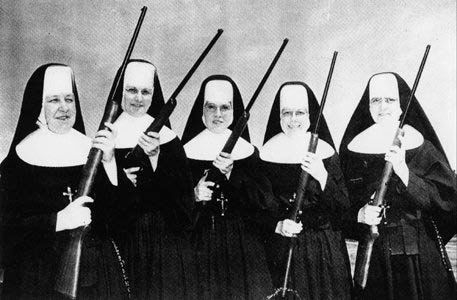
(the pictures are from Kate Eric's collection, Stories for Bad Children)

As luck would have it, I got me a gig. It seems my willingness to take on the most bizarre and inhumane of jobs (refrigerator factory worker, nuclear power plant janitor, waitress, gas station cashier, middle school teacher) and my networking skills have paid off. Instead of sleeping too late and goofing around for the next two weeks, I'll be an ISS monitor at a middle school down the street, where a friend is an AP. Cush, I thought--read a book and babysit the bad kids. I kinda like the bad kids, as frustrating as they can be. Thank God, cause I have $17 in my checking account.

Yesterday a boy said angrily, "you're a bad teacher" when I wouldn't let him turn in half-done homework. My pulse quickened and I replied quickly, "yeah, well, I hear you're not the greatest student." The other kids laughed, and I felt ashamed. I had shamed him, reinforced the label put on him for years. I don't even know these kids, I'm a sub, there's no established rapport to fall back on in order to excuse sarcasm. These are kids who are here for getting busted with pot, who had been in fights or threatened to kill their teachers. They swear, a lot, and talk about hip-hop, sex, and gangs. I'm no angel, but I worry about them. A lot of them have learning disabilities, and have learned to hide their embarrassment behind a billy badass attitude. I'd be an asshole to assume I knew them, knew what they were all about, what their parents are like, their home, their experiences, their history.

The ISS routine in place was to copy down definitions of 50 words, such as "integrity" and "honor," then do homework. (If you knew why I'm a long-term sub, i.e. where the old guy went, you'd find that very ironic, but mum's the word. Watch the news.) Screw that noise. Determined they would learn something before they continued down the path to the ALC and eventually TYC, I decided to promise them extra credit in Language Arts if they would write about what they wanted to be when they grew up, or about who they look up to. I thought if I could make them think about things for themselves, not for their peers or their pride, wisom would somehow ensue. So far this week no one has taken me up on it. I procured books from the library, thinking a good read would make their day of sitting silently go faster. This was difficult, as the library would only give me the throwaway books, concerned the kids might rip up good books. I offered them the option of drawing or reading the newspaper, in addition to their classwork. No sleeping allowed. As the AP described, they were not supposed to have a good time in ISS--they were not supposed to want to come back again. That means I have to be bad cop all the time.I'm not really a confrontational person by nature--I don't go looking to start shit but I don't take it either. Shit, that is. And when you are the one in charge of making 8-10 juvenile delinquents who have not been taught manners, don't know how to play nice with others, and wouldn't read a book for free food and video games, you are doomed to be unpopular. I can deal, I thought. I've got a good teacher voice. I can be intimidating, stretched out to my full 5'11''. I can verbally demolish these kids, whose best burn is "shut up," or "you're gay." After a day or two though, I realized my approach must change.

I forced a softness into my voice, made myself think of them as just emotionally-confused and immature kids who are trying to find themselves, and offered help upon help when what I really wanted to give them was a sharp kick to the side of the head. Graduate school and ivory tower-type jobs make education seem easily student-centered. In real life, some students don't want your help, don't want to write, don't want to read, don't want to be here. I don't blame them, hearing the way some teachers (including myself at times) talk to them, pulling power plays over things like gum, talking, whatever. They're kids, they will break rules, they will push buttons. The bottom line is, it does matter what you say and how you say it. I'll be damned if I turn out like Principal Vernon:


I realize I'm not a savior or a martyr. I can't turn a kid around in a few days of ISS. I'll be disappointed a lot. It's a tough job that someone's gotta do, someone that isn't going to make things worse. So I focus on small victories. Larissa will be with me until Christmas. I'm not sure exactly what she did, but it must have been pretty bad. She is 14 but could pass for 26, her clothes too revealing for 8th grade, her makeup caked on. She worked hard all day but around 2pm she got very grumpy with me and refused to do anything else. After engaging in a brief and pointless power struggle, I dared her to read a book. It's 3:14, and she's still reading it. Danielle is also a frequent flyer, with the worst mouth I've seen in a while. Despite the fact that she has dropped the F bomb 6 times and hit another kid in the head, she has worked on her assignment all day, talking to herself, writing, reading. Kenny has brought his science worksheets up to me four times, each time returning poutily to his desk after I point out that he has not answered all the questions. This last time, he kicked a chair and threw down his book as I explained how in real life, you can't half-ass things, that you see them through to the end like a man. Only nicer. He told me to shut up, defeated and frustrated. Several zingers bubbled up in my mouth, but I said nothing. A few minutes later when he looked at me, I mimicked his big lower lip, and after a few seconds' standoff, he cracked a smile. The two sixth grade girls, imprisoned for fighting (each other), admitted they didn't know what the fight was really about, just that some other kids had said one was badmouthing the other.

What doesn't bend, breaks. TJ is sleeping at the corner desk, but oh well. I just caught Larissa's eye as she glanced up from her book. She smiled back at me, and kept reading.

Saturday, December 1, 2007

This isn't English


Fecho reiterates much of what we've read from Rosenblatt, Freire, Dewey, Delpit, and other educational theorists and researchers in an eloquent way. He uses narratives and metaphors and spends a while describing what his book is not. I appreciate his point that there's too much emphasis on "getting through" the school days instead of wrestling out-of-syncness in the classroom, but it wasn't until the narrative of the guitar lessons that I felt connected to Fecho. His thoughts on inquiry-based teaching, theory and practice, strong collaboration and learning with peers definitely resonated with me, and I made notes and everything, but when he described the futility of his childhood dream of being a guitar hero I saw his direct route to learning land. I took piano lessons for years, dutifully practicing chords and drills and performing in several recitals with perfectly executed concertos and opuses, but not with the intensity and passion I heard coming from the piano when my mom played it. The closest I came to that was when I sat playing a few songs that captured me--Canon in D, Moonlight Sonata, Water Music, Ave Maria, and Prelude No. 4 in E minor Opus 28. Those had meaning.

Tuesday, November 13, 2007

Saturday, November 10, 2007

shape shifting

I found myself nodding my head and occasionally saying "yeah" outloud while reading chapter 9 at the coffeehouse (understandable as it was written by one of the Gee brothers), luckily there are always some weirdos at coffeehouses. Today it was the girl reading and talking to herself.

Hello? Life has changed. People can’t expect to stay in the same job moving ever gradually up in the ladder their whole lives any more. The age of computer programming (in terms of the model of mind being like a computer with certain formulas and projected answers to slotted outcomes) is over--now we use rapidly evolving technology to enhance the person side of us rather than the other way around. "Identities today take work, a person is expected to craft them out of available social and cultural resources. A person is expected to take on new identities through life, dropping some, changing others, and taking on new ones." (166) We know narratives, story-telling, collaboration, authentic questions, critical thinking, all these things should be making up our classroom practices. And I think technology addresses all these things, but isn't being connected to education enough.

Gee examines particularly the identity-forming potential of current media, despite reluctance and inability to give true equitable experiences with all available technology in the classroom. This would scrape too hard the scab of traditional schooling. Jazus, we can't be letting the kids carry their Ipods and cell phones around willy-nilly! We can't let them chat or look at music videos online, are you crazy? There are no TAKS questions on that kind of thing. Plus, hell, they might enjoy it, and we can't have that. Plus who has the time or the desire to sit around and try to figure out ways to tie personal technology and communication to learning? Certainly not a grad student, that's for sure. Har.

Taking that idea a step further, Brian and I discussed during break once all the components of symbolic interactionism and self-fashioning available via....wait for it.....Myspace. My boyfriend claims to have contracted myspace from a public restroom somewhere in Oklahoma. It has that effect on you. Of course the space that is yours has its limitations (its trendiness being the first), there are only a fixed number of ways to express who you really are, but still, your username, your song, your pictures, your videos, your groups, your quote, your layout, who your top friends are (and in what order, and dammit you better be careful about that), which comments you approve/deny, the comments you leave others, the 'about me' section, the interests section, the blog, etc...all these things attempt to present a digital version of you. You form yourself. You shape your identity, and continue shaping. And of course it's a playground for pedophiles, phonies, porno-hopefuls, and other losers, but you gotta take the good with the bad. More importantly, you have to teach people how to use the tools. But did anyone teach our kids to do myspace stuff? No. That's my point. If there's something a kid latches onto, almost innately knowing how and liking to do things, we owe it to him to connect it to his classroom. Not in a dissecting, scientific, TEKS aligned way, but to consider it knowledge and not playing around. Kids LIKE using technology--they're not scared of it like my parents, or unable to use it in a meaningful way that will enhance their lives.

I'm starting to think that educational equity is tied to the amount of opportunities and experience (with an emphasis on exploration) we can give students, but opportunities are tied not only to economic resources but also to trust. Do we trust that students can benefit from multiple literacies? Trust goes back to underlying beliefs and values. Chapter 12 talks about the differences in search skill (in analyzing the experiences students of different SES attempting to conduct online research) being due to difference in symbolic capital, number of opportunities, prior academic experiences and families' economic realities, and calls for deliberate instructional practices by teachers who understand reproduction theory.

Here's why we really need to be teaching digital literacy:

Wednesday, October 17, 2007

Cheers to Beers (the author and the liquid)


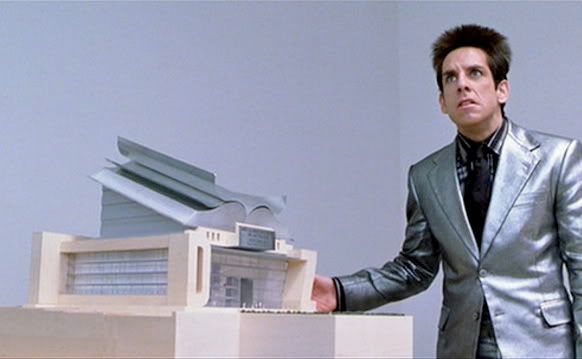
Derek Zoolander School for Kids Who Can't Read So Good and Want to Learn How to Do Other Stuff Good, Too.


So Beers' book is a new kinda thing--it's not really theory, it's definitely not a novel, it's more of a handbook jampacked with strategies to use in the classroom for struggling readers. So many strategies, in fact, that my notes for this book consist of what strategy appears on what page. I appreciate the notes between chapters written to George, the student she failed (not just by retaining him either), because I feel my own guilt of students I let slip by because I really didn't know where to begin to help. Beers is damn organized too--each chapter features the pragmatic "step inside the classroom" segment, a Q and A section, copyable charts and doodads, debriefing of the strategy and instructions on how to make it work. All very helpful, and needed, the kind of thing that would go over well at professional development. She is clear to say in the beginning that no one answer is the right one, but that there are answers, and her personable voice along with the case studies presented makes this a pretty straightforward read, I'm on pg. 160 after only a few hours of reading. The fact that she thanks Ed Farrell in her dedication and quotes from Rosenblatt and Cazden offsets the somewhat self-gratifying pictures of Beers in action (I like pictures in books, but it seemed a little unnecessary).

I've done the scripted approach, had to as a reading teacher for the Institute of Reading Development, and I agree with Beers' point about delineating between "direct" instruction vs. "scripted." But I will say the scripted approach does produce results as well, mostly for those students who already have a good grasp of school culture and don't have negative attitudes about reading. Beers says the negative attitudes, a lack of cognitive confidence, and an inability to choose books they like are three foundations for reading problems. She emphasizes connections, listening, and being explicit among many other strategies....I don't find myself having many questions or emotional reactions to this book, it is what it is. Very practical, and very organized. So I guess one way to write about it is to ask, which of these ideas have ya'll tried in the classroom, and how'd it work out for you?

Monday, August 20, 2007

what a fine looking question

If your early twenties are about finding yourself and having new experiences, your later twenties are about trying to answer the questions brought up in the last 5 years or so. It's been the theme song of my life lately, between my 8 year old neice's incessant interrogative about the mundane and overheard to a rousing and educational round of twenty questions in the car between Texas and Colorado to the constant question of what I'm going to do when I graduate, and I just don't know. I don't have the answers. I don't make the rules. Even the question of what we really want, how it's going to manifest itself becomes a huge cloud of whothefuckknows. I know some things. I like to think I know more than most people. Trying to make sense of things is a tough job, and I wonder if other people are asking questions too or if they're just floating along a sea of blissful ingnorance.

I just finished a book for class (I know) which poses as one of its central tenets the issue of "authentic questions," and how they really bring out the real life learning you should get in school, rather than the kind of learning you don't get when you try to figure out what the teacher is looking for. Curriculum questions like, "Was Huck Finn a good boy?" and "Why did Hamlet hesitate?" These kinds of questions can draw upon the fact-driven knowledge, the class discussions, but also and more so from opinions, beliefs, interpretations. These are not the questions being asked on standardized, multiple choice tests, fueled by political and economic reasons. That's why the schools are fucked up.

The biggest question is why. Why a lot of things. Anyone who thinks they really know probably is full of shit. But keep asking.

Pics from Colorado, one of my favorite trips so far:


Sunday, April 22, 2007

more of the same

I couldn't help but think about the maniac at V Tech as I read through the mountain of text for this week. It was inescapable as I waded into the part about social skills being part of the New Media Consortium's 21st century literacy, and participatory cultures. Earlier this afternoon, unable to fight off morbid curiosity, I watched the media package he sent to NBC the morning of the shootings--pictures of himself (many of them with guns), short clips of him talking crazy into the camera about random life problems, etc. I heard over the weekend that Nikki Giovanni is a prof at V Tech, and wouldn't allow the psycho into her class. Like those other kids who shot up their schools, this kid had been tormented and picked on all his life. In no way does past bullying justify the massacre of dozens of people, but it got me thinking about how many hurting kids are relying on public schools to teach them how to live and cope and communicate, and how they're falling short.

I was tempted to link Cho's video but didn't, to make a point. I will say that youtube has some interesting video responses, 2 cents, and personal stories to share about V Tech.

"Corporate cultures and their discourses of familiarity are frequently more subtly and more rigorously exclusive than the most nasty - honestly nasty - of hierarchies. Replication of corporate culture demands assimilation to mainstream norms, and this really works only if a person already speaks the language of the mainstream...these new workplace discourses can be taken in two very different ways - as opening new educational and social possibilities, or as new systems of mind control of exploitation...market-directed theories and practices, even though they sound humane, will never authentically include a vision of meaningful success for all students." (New London Group)

Most schools haven't really changed dramatically in a general sense, kids and their situations have. You can't keep teaching the same way for fifty years and expect the same results. I feel like the grading/testing/ranking effects of mass public school hurts us overall, as does the small box it forces everyone into. And I'm not saying that in a "no more teachers, no more books" kinda way, I'm taking into consideration what I've read about authentic assessments versus standardized testing, the psychology of learning, multicultural curriculum, arts-integrated curriculum, the plethora of stupid rules in place, the micromanaging of teachers, etc. I think it's kinda funny in a sad way that the New London Group article claims the most important skill students need to learn is to negotiate regional, ethnic, or class-based dialects, when in real life it seems like learning the white middle-class way to do, say, and think things is really what we're after. For the most part, attempts to validate and even respect other cultures or styles of expression are met with polite tolerance at best and fear/avoidance/persecution at worst.

"Schools regulate access to orders of discourse...the role of pedagogy is to develop an epistemology of pluralism that provides access without people having to erase or leave behind different subjectivities." (NLG) Yet we base nearly everything on a multiple-choice test. I still have nothing but admiration for teachers, but I won't be going back to the classroom myself until there are significant changes and a new administration. I appreciate the changes that some brave teachers and faithful districts are trying, using the new skills of our 21st literacy. But in real life, teachers lose their jobs if they don't do what districts and superintendents tell them to do, even if it's in the best interest of their kids, and it's the same at the administrative level and above. There are future educators who need jobs too. We need a change up at the top, someone who will follow through with what has shown to be successful.

Wednesday, February 21, 2007

Be the biggest tool you can be

I liked the title of Bomer's article, "Things that make kids smart," and immediately began thinking of everything as a tool of some kind. After all, we're born here with nothing and must learn how to survive with what's around us. I've always had a certain fascination with personal objects, but had not considered them as medium affecting our thinking. Strange, when you consider the pinnacle of caveman days the invention of the wheel, after which we viewed their comic grunting as the beginning of intelligent thought. I suppose earlier tools would include clubs for wife-beating, stick for hunting, etc. Before that, finger for pointing. And as the caveman begins to walk more upright he gains control over more tools, more implements, fire, spear, boat...and as we stop crawling and start pulling ourselves up on chairs, we progress until we're simultaneously driving, listening to the radio, reading signs, and talking on our cell phones.

The internet as a tool has infinitely affected the way that we think, as Bomer says, "this symbolic, theoretical aspect of a tool and its use is an instance of the relationship between the material and the idea, or materiality and ideality" (226). Both the opportunities and needs for use and the ideality between its function are staggering--many people probably no longer compose on paper, do their taxes by hand, apply for jobs, use the Yellow Pages, research papers, pay bills, shop, or write letters anymore. But the issues of past weeks' discussions concerning language and communication were still on my mind--a few days ago I subbed for an older teacher as she struggled to log into a website where she would take an interactive test (TOPS Protocol? Any other English teachers heard about this bullshit?) after completing a review session with video clips, mini-quizzes, slides, etc. It literally took her all day. Had I known she needed help, I would have easily rescued her by clicking the correct part of the menu, turning off the number lock, logging in, and skipping through the slides, which I did when she finally asked at the end of the day. Easy, right? No. What comes easily to me, almost naturally, did not to her. Even as I write this, I read an email from my mom asking how to use the word count. I realized that in the last year I've continued to pick up online tools without formal guidance, just by playing around. I don't say this to brag, I know everyone who reads this also knows how to do those things. My point is...well, it has something to do with play, learning, and tools. Let me talk about play first before I finish that thought.

"A child's greatest achievements are possible in play, achievements that tomorrow will become her basic level of real action and morality," said Vygotsky. I truly believe the best thing you can do for a kid as a parent is give them a good childhood, including lots of time to play. I thank my parents for long summer days, sprinklers, tree-climbing, snow forts, library trips, and mud pies. Most of my toys were ten year old hand-me-downs, including the Ken doll whose head popped off. A Playskool record player with accompanying Disney books and records. Kickball. As I grew older, my best friend and I played restaurant, school, hotel, secret detective, and casino. More kickball. As I grew older still, we didn't really play anymore, but we sat around and talked about boys and music and social events, and played sports. I think this has fostered my imagination and creativity, made me into a well-rounded person: I've had a lot of different jobs and roles in my life so far. What did you play when you were little?

"While playing at using the associated tools, they appropriate not just the tool and its proper functioning but the kinds of cultural and relational uses to which the object could be put. They rehearse not just the intellectual skills of writing but the subjectivity positions, attitudes, relations, and purposes that people take on when they write" (pg. 229).

While subbing I thought about tools, signs, mediums of knowledge and functionality in a school setting. I thought about the tools in place but not used, such as the motivational posters on the walls, the movie left for the sub to show the class, the websites the kids choose to use on their own. My favorite poster:There were opportunities for learning in discussing these things rather than taking them for granted. I thought about how frustrating it was to watch the kids lose, steal, or demolish school supplies such as pencils, binders, books. I thought about how the district misuses tools for assessment, from TAKS to TOPS Protocol, wasting time and losing good teachers. "The teacher could not limit the nature of the instruction students received. The larger culture teaches even what school does not" (p. 245).

In terms of teaching and closing the achievement gap, we've spent considerable time discussing how to be culturally-responsive, and should include the tools, actions, discourses, and activities students bring to the table. This is especially valuable because of the schism between home culture and school culture and the need to soften the transition. We should also dispose of what doesn't work, starting from the top down--God knows public education is way too cluttered anyway.

To get down to brass tacks, we are put here with each other and the earth and have to learn how to work with both. Since most of our conflicts deal with miscommunication and greed of some kind, it makes sense that if we could learn to do those things, it'd be a closer-to-perfect world. Then we'd be smart.