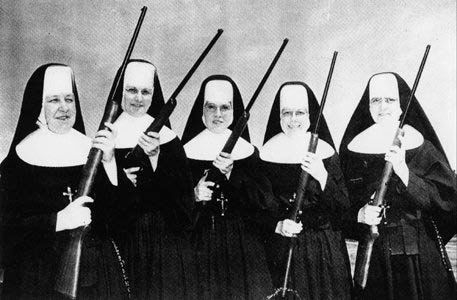
"Only in times of war do we allow ourselves the liberty of thinking that other societies are composed of or led by '"madmen.'"
So far I have read five chapters of Olson's book and am impressed at the vastness of writing's implications, touching on primitive cultures, the Reformation, Early Modern Science, heresy, Classic Greek civilization, art, memory, the alphabet, etc, all accompanied by a slew of writers and researchers. Unfortunately my own thoughts about writing are a little cranky right now, as the blog that I was working on about Olson somehow disappeared to the Island of Lost Documents. Thought I had saved it....nonetheless I am flipping through my heavily highlighted pages to toss up what I thought were the most salient and interesting points. Again. Actually, this has happened to me several times, I write what I think is a fantastic blog and somehow between composing and publishing, my mojo gets cross-modulated and I end up having to start from scratch. After the first two times, I began to realize that whatever crap I had written about my life or whatever was still there, it just had to be written again, and sometimes the second writing yielded better results, a clearer alphabetic picture of what I had in my mind anyway. I've always used writing as therapy, so I'm with Olson when he says Carruthers' assumption that "writing something down cannot change in any significant way our mental representation of it" is completely false, but her ideas about memory and writing as mnemonic arts sound interesting.
I wanted to think about my own concepts of writing and speaking before going on, in hopes that maybe Olson addresses them at some point. I am tempted to believe that words have a certain power on their own, and that saying words or phrases often can increase or decrease their power depending on the context in which they're used. The book spends considerable time discussing religion, specifically the Reformation. I was raised in a "Reformed" church, although I never really delineated our catechism from other denominations, I knew Calvinism and predestination had something to do with it, so I wasn't too jazzed. However, I do sporadically attend an Episcopalian church and feel a spiritual difference in myself, especially when reading from the prayer book, repeating ancient words and phrases, together, to God. Don't get me wrong, I have major beefs with organized religion and think that many, many terrible things have been done by Christian white men in Jesus' name, but this kind of communication does has transformative powers. After all, the Word was God and the Word became Flesh, right?
Another example--I attended the anti-Walmart ral

ly in my neighborhood the other day. This was a case where a large number of people had a message to convey and did so by physically coming together, holding signs, maybe chanting...the cool thing was while I stood there, countless cars honked and waved at us, some giving the thumbs-up or yelling encouragement. They didn't know me, but they knew the context, the neighborhood, the story, the implications. I didn't know the people in the cars, I didn't know the people I was rallying with, but we all came together and communicated our message, without orality or literacy, really. And that feeling, the community-feeling, almost made me a little teary, a group of people trying to stick it to the corporate a-hole, supported by strangers of the same mind.
Anyway, the first page of Olson's book was fantastic--all the examples of just how significant and ubiquitous writing is. He makes his case clearly, and I like the quote on page 3, "The assumptions about literacy that we may have to abandon are not worth holding in any case. Indeed, they underwrite poor social policy and poor educational practice." Those are two compelling reasons why we should be discerning. The idea that literacy is not all it's cracked up to be is a frightening one. A cultural anthropology prof in undergrad once raised a similar
question about agriculture (a dangerous suggestion when you teach at a school in the middle of Iowa) and if overall it was really a good thing. Seems like any new idea or invention is met with resistance and fear...it's no wonder we consider unfamiliar cultures "savage" or "heathen." I admire Olson for couragously posing ideas such as "Literacy is functional if one is fortunate enough to obtain such a position and not if not" (11) while also reminding us that the relationship between functional literacy and personal/social competence is not necessarily synonymous. In Chapter 3, Olson dissects the theory of Piagetian development as applied to cultural progress, pointing out that "all stable cultures are mature," and that a pyramid model of cultural stages would not have Western culture at the top. The voices being
heard in the world for the last thousand or so years has been primarily rich white men, but more voices are being raised and listened to now.
Whether we're talking about literacy, orality, technology, writing, speaking, performing, whatever, what we're really talking about is thinking. I think, therefore I am. To do is to be. It's very basic and yet very complex. What with all the various facets and options of communication today, and all the information being thought, conveyed, and acted upon, it's no wonder we're causing the global warming. We make meaning, search for answers.
I haven't read or seen this, but it was on Oprah....anyone?"Whereas spoken utterances tend to indicate both what is said and how it is to be taken, written ones tend to specify only the former." (pg. 91) Ch. 5 described how texts are to be , and Olson discussed many deep ideas such as the functionality of non-literate cultures, the concept of verbatim and how it relates to memory, and how we construct truth. Rosaldo's claim that "what is true is what one can get another to accept, not an objective account of a pre-existing fact," is certainly evidenced in our world of truth and lies. And again, ethnocentrism is echoed on pg. 100, where Olson writes, "It is we, modern literates, who hold special beliefs about reading and interpretation that make other orientations to writing seem faulty or primitive.
 Even Wikipedia says, "Postmodernism is an idea that has been extremely controversial and difficult to define among scholars, intellectuals, and historians, because the term implies to many that the modern historical period has passed," and warns readers of weasel words. How many other words and ideas and gestures have lost their black and white, becoming a gray mess dependent on the context and diplomacy of interpreters?